Anambra’s Second Airport Project: Necessity or Misplaced Priority?
Commentary: this article combines reporting with editorial analysis.

Watch video on its dedicated page
Ndikelionwu, Orumba North LGA, Anambra State. Anambra’s airport-centred development at Ndikelionwu raises a question that goes beyond the number of airports in the state: what economic return would justify its public cost while communities continue to seek road repairs and erosion protection?
The state government presents the Anambra Aerotropolis as a long-term industrial and logistics project. Critics question its timing, affordability and relationship with the existing Chinua Achebe International Airport at Umueri.
This commentary examines the published case for the development and the information needed to assess those competing priorities. It does not treat projected benefits as results already achieved.
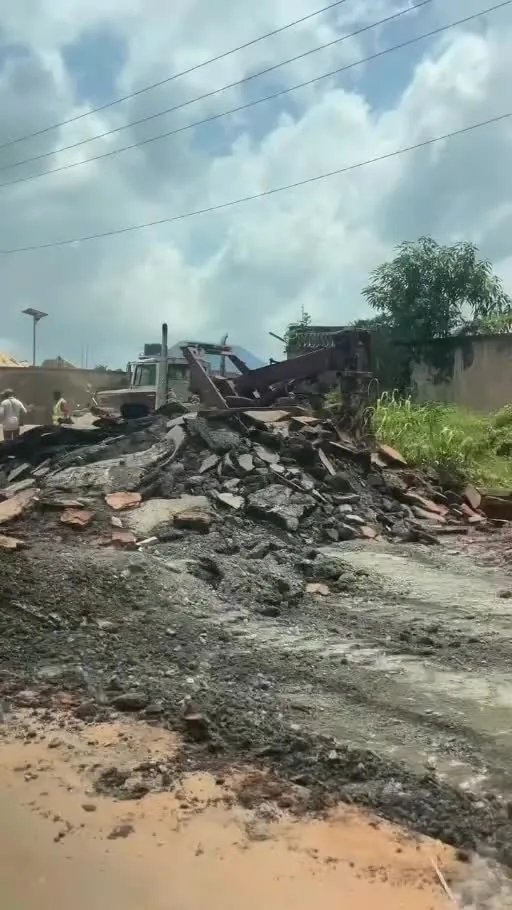
Watch the supplied on-site commentary
The commentary reflects the speaker’s observations and opinions. The footage documents visible conditions; it does not independently establish the project’s full scope, costs, approvals or economic viability.
What the government says it is building
In an explanation published on 14 August 2026, Information Commissioner Law Mefor described an aerotropolis combining aviation infrastructure with industries, logistics facilities and businesses. He linked it to the Anambra Mixed-use Industrial City and the state’s long-term development vision.
Mefor also acknowledged objections about cost, timing, land acquisition, compensation and whether sufficient traffic would sustain the facility. His position was that long-term industrial infrastructure should proceed alongside immediate public needs.
TradeFM reported on 11 August that aviation stakeholder Alex Nwuba supported understanding the proposal as a cargo-led economic city, rather than simply another passenger airport. His argument centred on manufacturers, exporters and the region’s commercial activity.
That distinction matters. A cargo and industrial strategy requires evidence about freight demand, tenants and logistics costs, as well as passenger demand. A project’s description alone does not demonstrate commercial viability.
What published records show about activity and cost
An official report dated 8 October said a contractor had mobilised for a 24.03-kilometre road project, including two bridges, between Coca-Cola Road in Agu-Awka and Aerotropolis City in Ndikelionwu.
Separately, the government’s Solution Lens project register, reviewed for this article, lists a ₦12.2 billion contract sum for “Construction and Dualization of the Aerotropolis Road 1 and Airport Main Access Road”, reference ANSG/MOW/PRJ/2026/030.
That figure is for the named road component, not the total airport or aerotropolis budget. It is also a contract sum, not proof that the full amount has been spent. The two road records should not be added together or assumed to describe identical contract boundaries without supporting documents.
Anambra Socials has not verified a consolidated cost covering the airport, associated industrial development, connecting infrastructure and future operating support. A reliable answer to “how much will taxpayers pay?” requires those elements to be separated, with the state’s obligations distinguished from any private investment.
How would the project complement Umueri?
The existing airport’s official information lists scheduled commercial connections from Umueri to Lagos and Abuja. The new development therefore needs a clear explanation of which additional services it would provide.
Nwuba’s reported case is that the new site would support cargo, logistics and industrial expansion, while Umueri would retain its role. These are arguments for complementarity, not independently verified forecasts of future traffic or revenue.
A useful comparison would publish recent passenger and cargo volumes at Umueri, its available capacity, expansion options and the expected demand for the new facility. It should explain why the proposed investment performs better than expanding existing infrastructure or improving surface access.
Roads, erosion and the cost of competing priorities
In a 9 July opinion article in Premium Times, Chukwuemerie Uduchukwu questioned the demand assumptions and fiscal case for a second airport. That is a published critique, rather than an independent audit of the project.
Anambra Socials’ reporting on erosion and deteriorating roads documents a different set of urgent concerns: threatened homes, damaged access routes and disruption to everyday journeys.
Those needs do not, by themselves, prove that an aviation investment is unjustified. Equally, a long-term industrial ambition does not remove the duty to explain why spending is being committed now and how essential repairs will remain funded.
Editorial view: publish the evidence behind the decision
Anambra Socials believes the government should make the project’s feasibility case, financing structure and phased costs accessible to the public. Residents should be able to examine the assumptions about cargo, airline interest, industrial tenants, operating revenue and any continuing public subsidy.
Land acquisition and compensation arrangements, environmental assessments, regulatory approvals and measurable delivery milestones also deserve clear disclosure. The relevant question is whether the proposed benefits can be delivered at a cost the state can afford, compared with credible alternatives.
Until that comparison can be examined, neither a promise of transformation nor a claim of waste is a sufficient conclusion. Public scrutiny should test both the economic case and the consequences for services communities need today.
Sources and reporting basis
- Anambra State Government, 14 August 2026: Law Mefor’s explanation of the aerotropolis strategy.
- TradeFM, 11 August 2026: Alex Nwuba’s cargo and industrial-development argument.
- Anambra State Government, 8 October 2026: associated road mobilisation report.
- Solution Lens: named access-road contract record, reviewed 22 October 2026.
- Chinua Achebe International Cargo Airport: official service information, reviewed 22 October 2026.
- Premium Times, 9 July 2026: Chukwuemerie Uduchukwu’s opinion on the proposal.
Editor’s note: This is Anambra Socials commentary based on the published sources linked above and the supplied video. The location of the footage is attributed to its accompanying description. Government descriptions, forecasts and register entries are attributed to their publishers; they are not findings from an independent engineering or financial audit. No consolidated project cost or independent on-site inspection has been verified for this article. The featured image is an AI-generated conceptual illustration, not a photograph, approved design or depiction of current construction.
Categories: Roads and Infrastructure, Politics and Governance, Business and Markets
Related Articles
Agulu–Nnewi Road Undergoes Fresh Roadworks Amid Questions Over Quality and Durability
Footage shows machinery removing asphalt on Agulu–Nnewi Road amid concerns about road durability. A link to the Commissioner’s intervention remains unconfirmed.

Nnobi Junction Expansion: Five-Lane Project Takes Shape at Afor Nnobi
Drone footage shows construction at Afor Nnobi Junction as Anambra expands the intersection, with traffic, drainage and compensation concerns in focus.

First Niger Bridge: Rehabilitation, Reopening and Political Controversy
Commentary on the First Niger Bridge rehabilitation, delayed reopening, median barriers, Tinubu photographs and Dave Umahi’s ribbon-cutting ceremony.