
Soludo, Where Are the Trains? Anambra’s Unfulfilled Promises as Governor Turns Presidential Campaign Coordinator
Opinion: views and arguments are distinguished from independently established facts.
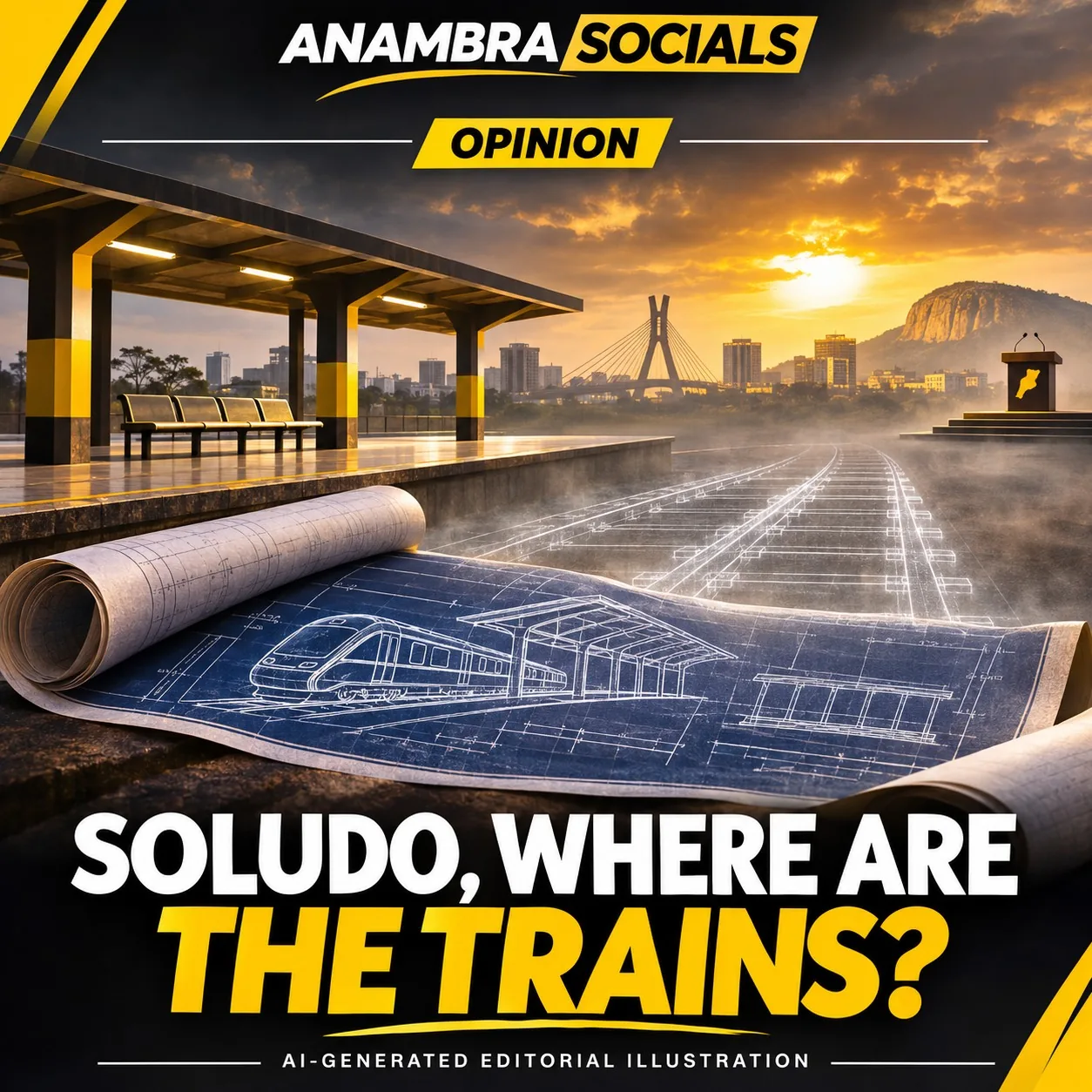
When Professor Charles Chukwuma Soludo assumed office as Governor of Anambra State in March 2022, he presented an ambitious vision of transforming the state into a modern, prosperous and economically competitive destination.
His administration spoke of railway transportation, industrial expansion, world-class shopping facilities, reliable electricity, improved water supply, tourism development and environmental sustainability.
These were not insignificant promises. They represented the kind of transformation that could fundamentally change how Ndi Anambra live, work, travel and conduct business.
More than four years later, however, some of the most ambitious proposals remain largely on paper.
Yet, as residents continue to await the implementation of these projects, the governor appears increasingly occupied with another assignment: coordinating President Bola Tinubu’s 2027 presidential campaign in Anambra State.
This raises an important question: Has political mobilisation become a greater priority than delivering the development promises made to Ndi Anambra?
The Railway Promise: Where Are the Trains?
Perhaps one of the most striking examples is the proposed Anambra railway network.
In September 2023, Soludo’s administration announced plans for a railway master plan designed to connect major commercial centres and towns across the state.
The proposed network generated considerable interest because Anambra’s commercial economy depends heavily on the movement of people and goods.
Imagine a functioning railway system linking Onitsha, Nnewi, Awka, Ekwulobia and other important economic centres.
Such infrastructure could reduce pressure on roads, improve commercial transportation and create new economic opportunities.
By the time of the 2025 budget presentation, the government announced that the railway master plan and feasibility study had been completed.
In the 2026 budget, Soludo again confirmed that the comprehensive rail transport master plan was ready, while acknowledging that the administration was exploring public-private partnership financing.
But a completed master plan is not a completed railway.
Where are the railway tracks? Where are the stations? Where are the construction contracts, secured financing agreements and implementation timelines?
As of November 2026, there is no independently verified evidence of an operational railway network resulting from this proposal.
The administration may argue that railway construction requires enormous investment, federal regulatory cooperation and long-term planning. Those are legitimate considerations.
However, more than three years after the public announcement, Ndi Anambra deserve a transparent account of what has been achieved beyond consultancy and planning.
A railway cannot transport passengers on paper.
Africa’s Largest Shopping Mall: Another Ambitious Announcement
In his 2025 budget speech, Governor Soludo announced plans to build what he described as Africa’s largest shopping mall.
The proposed project was presented as part of the administration’s ambition to transform Anambra into a major commercial and investment destination.
For a state with the commercial influence of Onitsha and Nnewi, such a development would naturally attract attention.
But what has happened to that ambition?
The government’s public project register has identified the Awka Shopping Mall as being in progress, although the available record does not provide a recent verified completion percentage.
It is also unclear whether the registered Awka Shopping Mall is the same development intended to fulfil the much larger promise of Africa’s largest shopping mall.
Where is the publicly available project specification? What is the proposed floor area? Who are the investors? What is the construction timetable?
Ambitious declarations should be accompanied by measurable implementation.
Electricity: The Reality Behind the Promises
Anambra is home to some of Nigeria’s most important commercial and industrial communities.
From the manufacturing industries of Nnewi to the markets of Onitsha, reliable electricity is essential for economic growth.
Yet the state continues to face a substantial electricity deficit.
On 12 November 2026, Governor Soludo reportedly acknowledged that Anambra requires approximately 1,000 megawatts of electricity while receiving only about 102 to 120 megawatts from the national grid.
Although these figures do not account for every private or alternative power source, they illustrate the scale of the challenge.
The administration has undertaken electricity-sector reforms and solar projects, which should be acknowledged.
Nevertheless, the broader promise of dependable electricity for households and businesses remains far from fully realised.
For manufacturers who depend on expensive generators, electricity reform must ultimately be measured in hours of reliable supply and reductions in operating costs, not merely policy announcements.
Water Supply: Progress in Some Communities, Questions Across the State
The administration has reported the rehabilitation and restoration of several water schemes.
Those achievements deserve recognition.
However, isolated completed projects do not establish that residents throughout Anambra now have reliable access to safe drinking water.
How many households have functioning connections? How frequently is water supplied? How many communities still depend on privately drilled boreholes and commercial water vendors?
These are measurable questions that should be answered through publicly accessible data.
Erosion: Anambra’s Continuing Environmental Emergency
Few environmental challenges threaten Anambra as severely as erosion.
Communities have watched roads, farmland and property become increasingly vulnerable to destructive gullies.
The Soludo administration has undertaken erosion-control interventions, and it would be inaccurate to suggest that nothing has been done.
Nevertheless, the scale of the crisis remains alarming.
Government reporting has identified more than 1,000 active gully erosion sites threatening approximately 160 communities.
For residents living near expanding erosion sites, the urgency is immediate.
The administration should publish a comprehensive account of affected locations, awarded contracts, completed interventions and outstanding projects.
Environmental protection should be judged by the number of communities made safer, not simply the number of projects announced.
Tourism: Beautiful Destinations Still Waiting for Transformation
Anambra possesses remarkable tourism assets, including Ogbunike Caves, Owerre-Ezukala Cave and Waterfalls, and Agulu Lake.
Soludo’s administration has repeatedly identified tourism as a potential driver of economic diversification.
Yet significant aspects of the proposed development of these destinations remain in planning or implementation stages.
In 2026, government officials were still discussing master plans and proposed resort facilities.
The questions remain: Where are the completed tourism facilities? What investment has been secured? When will these destinations begin operating at the scale promised?
Tourism development requires more than publicity. It requires accessible roads, visitor facilities, safety, maintenance and sustainable commercial operations.
Onitsha Inland Dry Port: What Happened to the Proposal?
The proposed Onitsha inland dry port is another development commitment that deserves clarification.
Anambra’s commercial importance makes efficient cargo movement a major economic priority.
An operational inland dry port, subject to the appropriate infrastructure and regulatory arrangements, could help improve logistics and reduce some of the burdens faced by importers and traders.
However, the public record reviewed does not establish that the proposed facility has become operational under Soludo’s administration.
The government should clarify whether the project remains an active commitment, who is responsible for implementation, and what progress has been made.
From Governor to Presidential Campaign Coordinator
While these major development ambitions remain outstanding, Governor Soludo has taken on an increasingly prominent role in national electoral politics.
On 13 October 2026, the All Progressives Congress named him Anambra State coordinator of President Bola Tinubu’s 2027 presidential campaign.
This is particularly significant because Soludo governs Anambra under the All Progressives Grand Alliance, not the APC.
On 6 November, at an APGA campaign event in Awka, Soludo publicly pledged to deliver at least 50% of Anambra’s votes to President Tinubu.
A sitting governor is entitled to participate in political activities and support a presidential candidate.
But political rights do not eliminate the responsibilities of public office.
The governor was elected to govern Anambra State, not merely to organise political support for another politician’s presidential ambition.
The concern is not simply that Soludo supports Tinubu. It is whether the time, attention and political energy devoted to the 2027 campaign are compatible with the urgent development responsibilities still awaiting delivery.
There is no established evidence that his campaign appointment directly caused delays to the railway or other projects. Nevertheless, the contrast between the outstanding promises and his growing campaign responsibilities raises legitimate questions about priorities.
Ndi Anambra deserve answers.
Political Loyalty Cannot Replace Development
Governor Soludo has repeatedly presented himself as a leader committed to long-term economic transformation.
His administration can point to completed roads, bridges, public facilities and other investments.
Those achievements should be acknowledged.
But the existence of completed projects does not remove the obligation to account for outstanding promises.
A governor cannot expect citizens to measure performance exclusively by what has been delivered while ignoring the major commitments that remain unrealised.
The railway project deserves a clear timetable.
The proposed shopping mall deserves a transparent implementation report.
The electricity deficit demands measurable improvement.
Communities threatened by erosion deserve protection.
Tourism promises deserve more than repeated announcements.
And the proposed inland dry port deserves a definitive explanation of its status.
Governor Soludo, Anambra Must Come First
As the 2027 presidential campaign gathers momentum, Governor Soludo faces an important question of public accountability.
How much attention will be devoted to mobilising votes for President Tinubu, and how much will be devoted to fulfilling the development commitments made to Ndi Anambra?
The people of Anambra did not elect a governor simply to become an influential figure in national political calculations.
They elected him to improve their state.
They were promised transformation, economic opportunity, modern infrastructure and better living conditions.
Political alliances may change. Presidential campaigns will come and go. But the development needs of Anambra will remain.
Before asking Ndi Anambra to deliver votes for another four years of a presidency, Governor Soludo should provide a detailed account of the major development promises his own administration has yet to deliver.
The people deserve more than master plans, feasibility studies and political speeches.
They deserve implementation.
Governor Soludo, where are the trains?
The views expressed in this article are those of the author. Anambra Socials welcomes documented responses and project updates from the Anambra State Government.
Nnamdi Mezue
Anambra Socials
Sources: Anambra State Government’s 2025 and 2026 budget speeches; Channels Television reports of 13 October and 7 November 2026; Anambra State public project records; government erosion-control reporting; and published statements on railway and tourism development.
Categories: Opinion, Politics and Governance, Roads and Infrastructure
Related Articles
Kingsley Ubani Questions Okey Ezeobi’s Remarks and Anambra’s Road Record
In this opinion piece, Kingsley Ubani criticises remarks attributed to Anambra Works Commissioner Okey Ezeobi and questions the state’s road projects and Ekwulobia flyover timeline.
Ekwulobia Flyover: Statement Date Stamps
Kingsley Ubani compares official statements about the Ekwulobia flyover. An editorial source note clarifies dates and unverified wording.
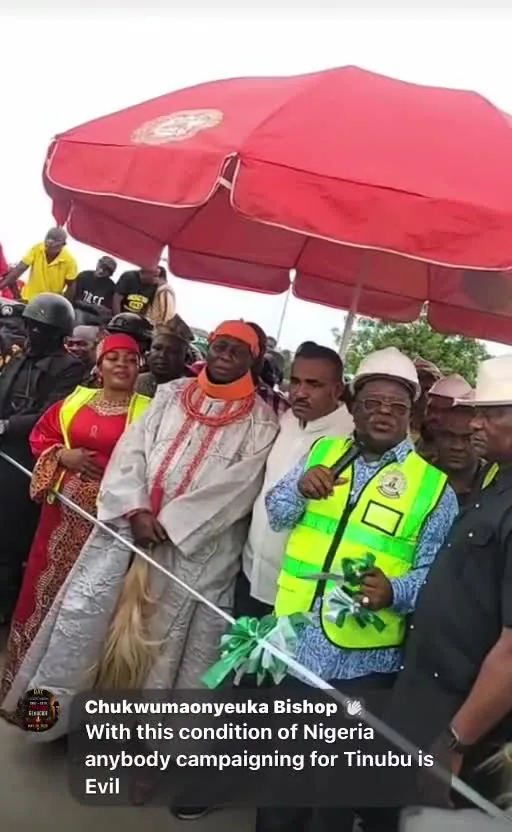
First Niger Bridge: Rehabilitation, Reopening and Political Controversy
Commentary on the First Niger Bridge rehabilitation, delayed reopening, median barriers, Tinubu photographs and Dave Umahi’s ribbon-cutting ceremony.