First Niger Bridge: New Layout Renews Questions About Traffic Management and Emergency Access
Commentary: this article combines reporting with editorial analysis.
Featured media: Still from supplied footage identified as the First Niger Bridge. Original recorder and filming date have not been independently authenticated.
Watch video on its dedicated page
ONITSHA, Anambra State. The new median barrier on the rehabilitated First Niger Bridge has renewed debate about how traffic should be managed on the crossing between Onitsha and Asaba, particularly when a vehicle breaks down or emergency workers need access.
This commentary argues that changes to a busy road’s layout should be accompanied by clear operating guidance, visible signs and a practical incident-response plan. It does not establish that the barrier has caused a particular crash or that the bridge is structurally unsafe.
Watch the supplied traffic footage
The clip shows vehicles on a steel bridge carriageway beside a concrete divider. It offers a limited view of conditions at one moment, rather than a measurement of overall traffic capacity, emergency response times or the effectiveness of the entire layout.
Emergency provisions have been announced
It would be misleading to suggest that no emergency access measures have been provided. In its 16 October report on the reopening, Voice of Nigeria reported Works Minister David Umahi’s statement that the rehabilitation included median barriers and three designated turnaround points intended to assist traffic control and emergency manoeuvres.
The report also described resurfacing, repainted road markings, lighting and surveillance facilities. Those announced improvements provide important context, but do not by themselves demonstrate how effectively incidents are being managed in daily use.
Earlier, PUNCH reported on 7 October that Federal Controller of Works Timothy Emenike said openings had been created to support emergency turns and access for the FRSC, fire service and other response agencies.
Engineers raised concerns about manoeuvrability
The concerns are not limited to social media commentary. An Anambra Daily report of the Nigerian Society of Engineers’ Onitsha Branch inspection on 6 October recorded the branch’s concern that the barriers reduced usable carriageway width, with possible implications for vehicle movement, traffic flow and emergency response.
The same account recorded the engineers’ commendation of the rehabilitation work they observed. It also described officials briefing the team on emergency lay-bys and towing arrangements. The concerns therefore call for assessment of the operating system as a whole, rather than treating the engineers’ statement as a finding that every aspect of the work was defective.
What should traffic authorities clarify?
The Federal Road Safety Corps, Federal Ministry of Works and other relevant agencies should explain how the modified crossing is intended to operate during congestion, vehicle breakdowns and emergencies.
Useful public information would include how incident recovery is coordinated, how drivers should respond to an obstruction, and how emergency openings are controlled. Clear signs, consistent markings and public awareness messages would help motorists understand the layout and avoid unpredictable movements.
Anambra Socials has not independently confirmed the current positioning or response times of recovery vehicles, or obtained a current traffic study assessing the median’s effects. The footage is not evidence that all announced facilities are absent.
Assess performance before prescribing a redesign
Separating opposing traffic can support orderly movement, but the crossing must also function when something goes wrong. The relevant test is whether the layout and response arrangements work together under real operating conditions.
Any proposal to alter the barrier should follow a qualified road-safety assessment considering lane widths, collision risks, emergency access and recovery operations. Drivers should follow authorised directions and should not attempt to cross or move the divider themselves.
The public deserves a clear explanation of the arrangements already in place and evidence of how they perform. Better traffic management and an engineering review, where warranted, should be guided by that evidence.
For background, read our coverage of the bridge rehabilitation and reported breakdown-related congestion. Readers with dated footage or documented agency updates can contact Anambra Socials.
Reporting note
This article is commentary by Anambra Socials. Sources reviewed on 24 October 2026 are linked within the relevant paragraphs. Official provisions are attributed to the published accounts of officials’ statements; their present operational effectiveness has not been independently audited here. The supplied clip’s recording date and original recorder remain unconfirmed. No newly obtained FRSC or Ministry response to this commentary is represented.
Categories: Roads and Infrastructure, Opinion
Related Articles
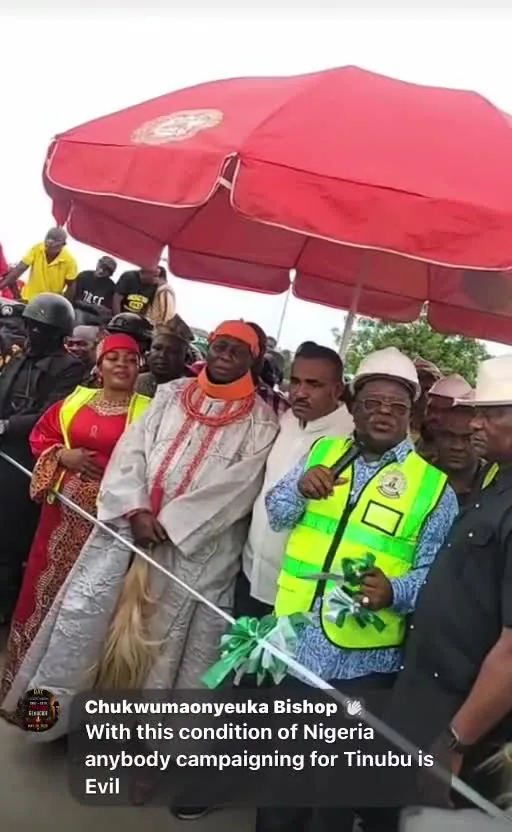
First Niger Bridge: Rehabilitation, Reopening and Political Controversy
Commentary on the First Niger Bridge rehabilitation, delayed reopening, median barriers, Tinubu photographs and Dave Umahi’s ribbon-cutting ceremony.

Bright Street Roadworks: Resident’s “Bouncing Road” Claim Raises Quality Questions
A resident alleges a road layer at Bright Street near Union Bank is bouncing. Watch the footage and see what official project records do and do not establish.

Obodoukwu Road: Residents Raise Flooding and Safety Concerns in Ogbaru
Residents raise flooding and safety concerns on Obodoukwu Road near Coca-Cola Market, Ogbaru. Watch the footage and read the historical and rehabilitation context.